
AGUA
WATER
¿Sin gravedad, o dentro de ella?
WITHOUT GRAVITY, OR WITHIN IT?
-
Without gravity, or within it?
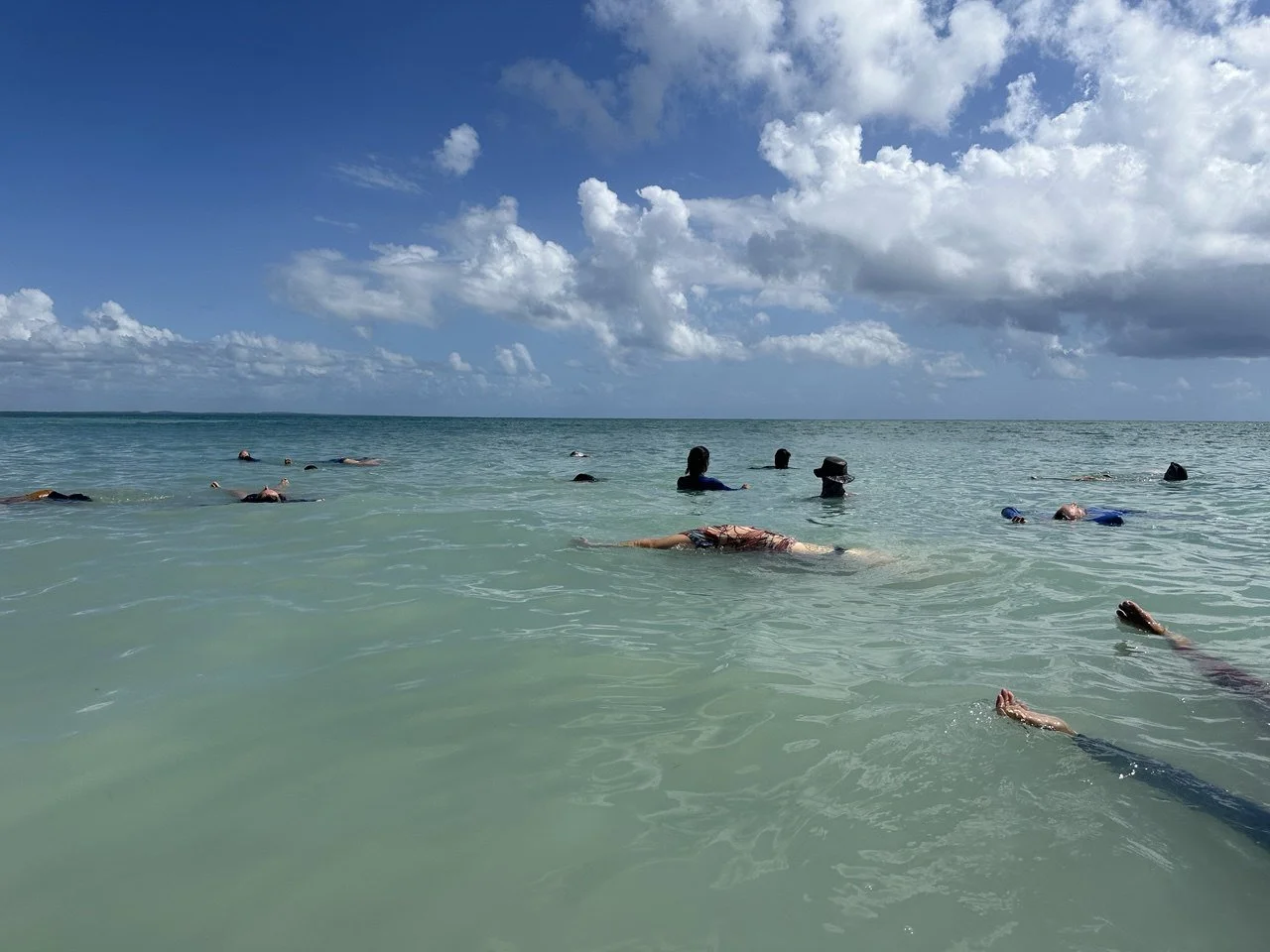
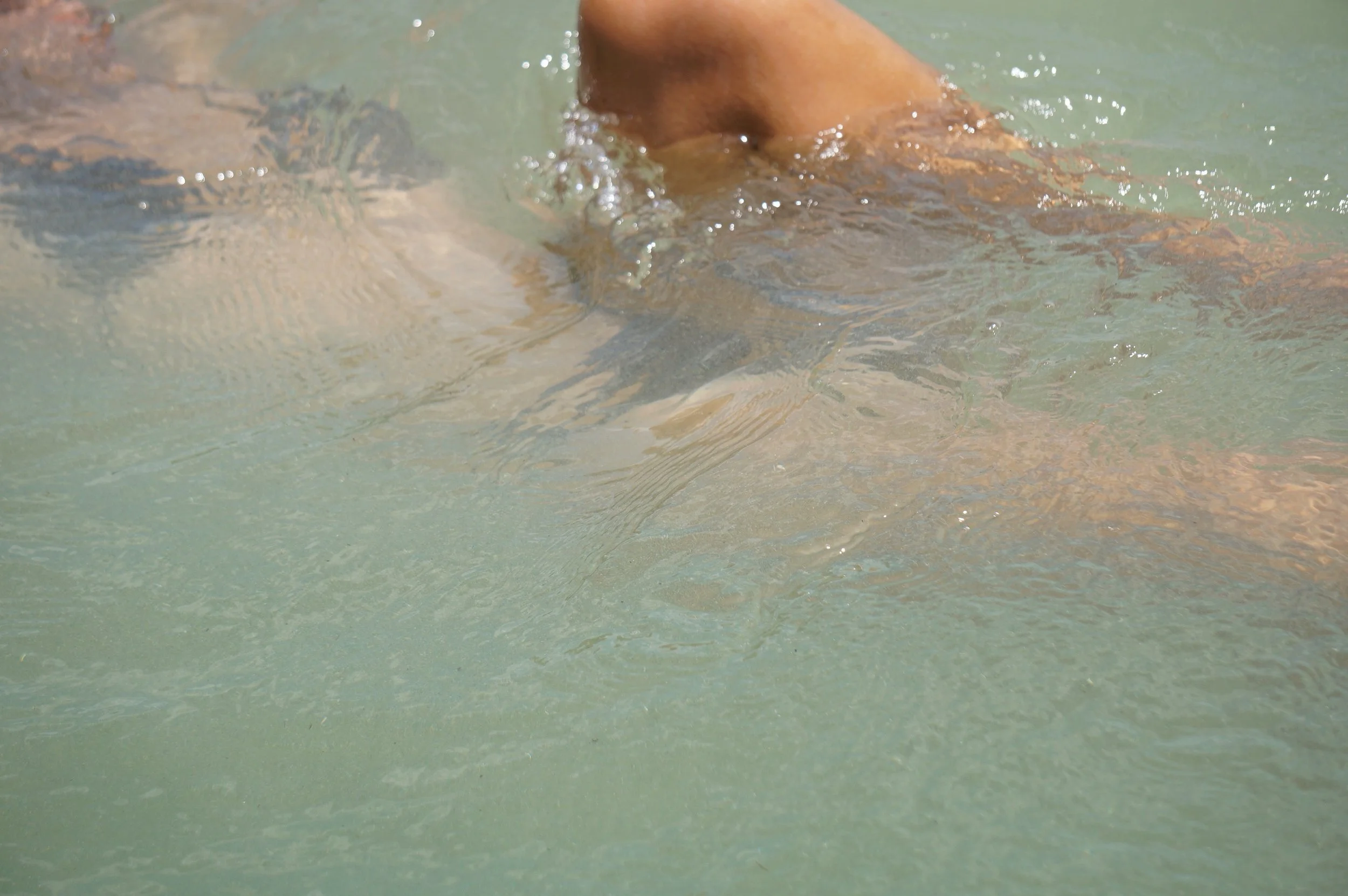
In water, gravity transforms but does not disappear. Buoyancy frees us from the bodily weight we live with on land, and hydrostatic pressure surrounds us from every direction, offering the skin a new way of perceiving. Our inner fluids respond to the medium around them, breathing becomes more conscious, and muscle tone reorganizes in relation to the liquid environment, allowing us to fall endlessly while being held at the same time, just as in the womb. Returning to this kind of experience can invite the nervous system to move out of alertness and toward calm, safety, and co-regulation. In water, the soma is invited to organize itself from the center, drawing closer to our earliest patterns of movement. What on land we learn through support, in water we explore through surrender and suspension.
En el agua, la gravedad se transforma pero no desaparece. La flotación nos libera del peso corporal que vivimos en la tierra, y la presión hidrostática nos envuelve desde todas las direcciones, ofreciéndole a la piel una nueva forma de percibir. Los fluidos internos responden al medio que los rodea, la respiración se vuelve más consciente y el tono muscular se reorganiza en relación con el ambiente líquido, permitiéndonos caer infinitamente y estar sostenidos al mismo tiempo, tal como en el vientre materno.
MOVIMIENTO
SOMÁTICO ACUÁTICO
AQUATIC SOMATIC MOVEMENT
-
Somatic Movement Exploration in Water
Somatic Movement exploration in water is a conscious body practice in which the therapeutic and sensory qualities of the aquatic medium emerge. It is based on the internal exploration of the body through lived experience, facilitating processes of self-knowledge, sensorimotor reorganization, and a deep connection with oneself.
Somatic Movement in Water can be practiced individually, in duos, in trios, or in groups, and is open to people of all ages who are interested in cultivating a more intimate, sensitive, and fluid relationship with their body and their personal history.
In the aquatic environment, the body is immersed in a setting of reduced gravity, where buoyancy offers three-dimensional support that distributes weight differently from how it is usually distributed on land. At the same time, water has a quality of adaptability, responding in real time to the speed, direction, and quality of movement and providing continuous proprioceptive feedback.
This combination of support and resistance creates an optimal environment for neuromotor learning and for the reorganization of muscle tone, as we stimulate more balanced responses in the autonomic nervous system. Where there is unnecessary muscle tension, it tends to decrease with practice, giving rise to a more fluid, spontaneous, and self-regulated quality of movement. In this aquatic state, we can explore movement sequences that are not accessible on land (firm ground) because of the change in gravitational load, especially those related to early neurological patterns that emerged in aquatic environments during evolutionary and embryonic stages.
Likewise, the constant relationship with the pressure and density of water stimulates the vestibular and proprioceptive systems, modulating our spatial orientation, our inner balance, and our perception of bodily boundaries.
La exploración de Movimiento Somático en Agua es una práctica corporal consciente donde emergen las cualidades terapéuticas y sensoriales del medio acuático. Se basa en la exploración interna del cuerpo desde la experiencia vivida, facilitando procesos de autoconocimiento, reorganización senso motora, y conexión profunda con uno mismo.
El Movimiento Somático en Agua puede practicarse de forma individual, en dúo, triadas, o en grupo, y está dirigido a personas de todas las edades interesadas en cultivar una relación más íntima, sensible y fluida con su cuerpo y su historia.
En el medio acuático, el cuerpo se encuentra inmerso en un entorno de gravedad reducida, donde la flotación ofrece un soporte tridimensional que distribuye el peso de manera distinta a como es habitualmente en la tierra. Al mismo tiempo, el agua ofrece una cualidad de adaptabilidad, que responde en tiempo real a la velocidad, dirección y calidad del movimiento, brindando un feedback propioceptivo continuo.
Esta combinación de soporte y resistencia crea un entorno óptimo para el aprendizaje neuromotor y la reorganización del tono muscular pues basicamente estamos al estimulando respuestas más equilibradas para el sistema nervioso autónomo. Cuando tenemos una tonicidad innecesaria, con la práctica tiende a disminuir, emergiendo una calidad de movimiento más fluida, espontánea y autorregulada. En este estado acuático, podemos explorar secuencias de movimiento no son accesibles en la tierra (suelo firme) debido al cambio gravitacional, especialmente aquellas relacionadas con los patrones neurologicos tempranos que emergieron en ambientes acuáticos durante las fases evolutivas y embrionarias.
Por otro lado, la relación constante con la presión y la densidad del agua estimula el sistema vestibular y propioceptivo, modulando nuestra orientación espacial, el equilibrio interno y la percepción de límites corporales.
VIDEO FILMED AT OUR AQUATIC WORKSHOP IN MORERE BRAZIL. THIS EDITING IS A PROMOTIONAL VIDEO FOR THE COMING EDITION 2027
FORMATOS DE TRABAJO
WAYS OF WORKING
Partimos de una visión del cuerpo como paisaje vivo de memorias celulares, donde la práctica acuática permite el acceso a capas profundas de sensibilidad y reorganización, tanto a nivel físico como emocional y relacional. Cada experiencia es única y co-creada en el presente con el entorno. Es una práctica viva, en diálogo constante con el cuerpo, con el agua y con el misterio del movimiento.

01
GRUPO
La experiencia grupal pone énfasis en la agencia del participante, favoreciendo la autonomía, la autoexploración y el descubrimiento personal del flotante. Son sesiones de exploración activa para ampliar las capacidades de reorganizarse y encontrar nuevas maneras de habitar el espacio acuático. Practicamos el sostén y la colectividad en el proceso de repatronación de movimiento.
02
SESION 1:1
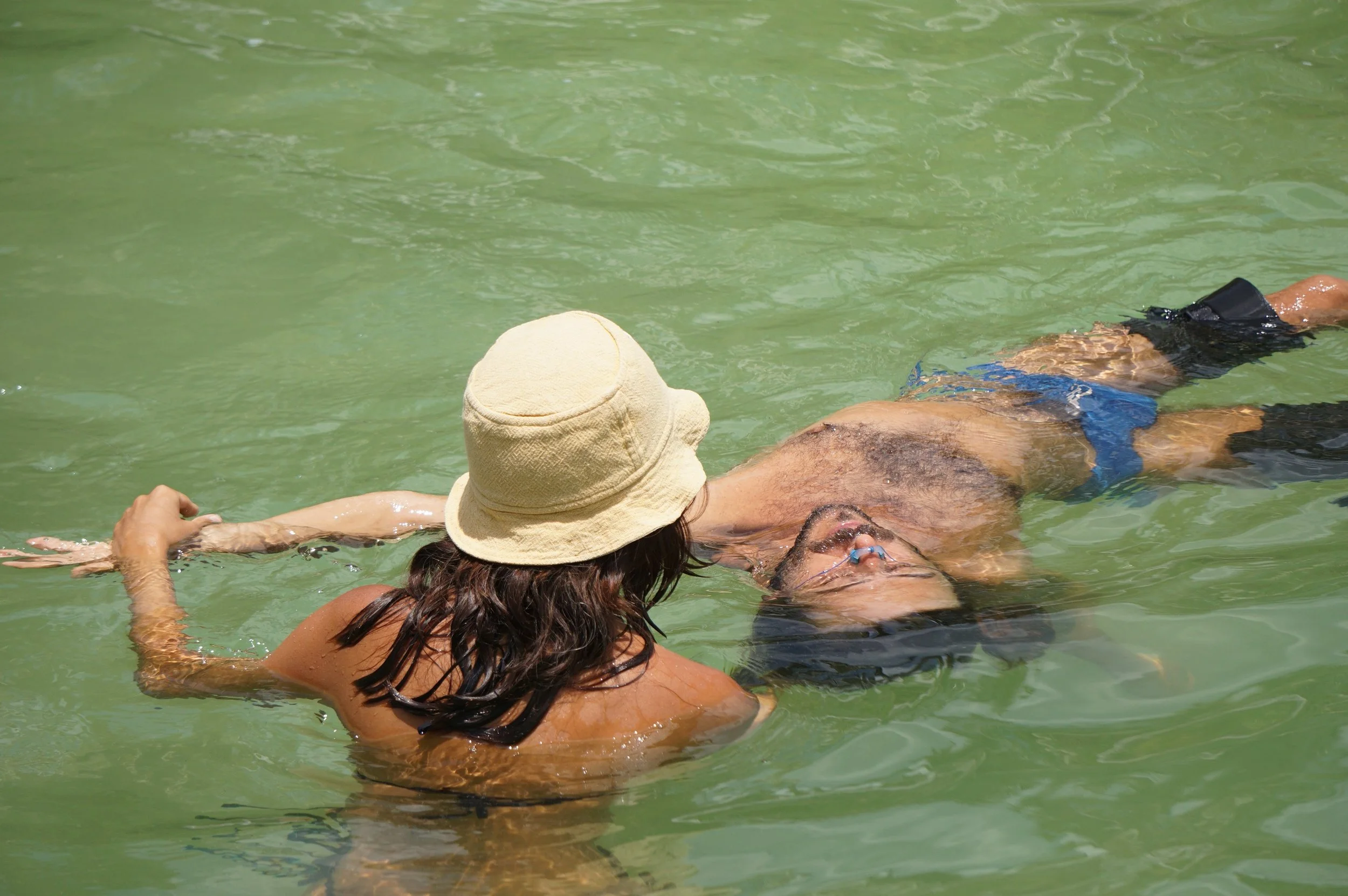
En estas sesiones el flotante por su parte encuerpa la posibilidad de dejarse llevar sin necesidad de tomar decisiones activas en el proceso ademas de gestionar su respiración. El rol del facilitador es activo; es decir, movemos al flotante, guiando su cuerpo a través de secuencias específicas de movimiento, adecuadas a las las necesidades del flotante.
-
WAYS OF WORKING
We begin from a vision of the body as a living landscape of cellular memories, where aquatic practice allows access to deep layers of sensitivity and reorganization, on a physical, emotional, and relational level. Each experience is unique and co-created in the present moment with the environment. It is a living practice, in constant dialogue with the body, with the water, and with the mystery of movement.GROUP SESSIONS
The group experience emphasizes the participant’s agency, fostering autonomy, self-exploration, and the personal discoveries of each floater. These are sessions of active exploration that expand our capacity to reorganize and to find new ways of inhabiting the aquatic space. We practice holding and collectivity as part of the process of movement repatterning.
1:1 SESSIONS
In these sessions, the floater embodies the possibility of letting go, without needing to make active decisions in the process, aside from managing their own breathing. The facilitator’s role is active: we move the floater, guiding their body through specific sequences of movement tailored to the floater’s needs.